What is witch house music?
Witch house is a label associated with dark electronic music in which heavy rhythms, hazy synthesizer textures, and an unsettled atmosphere can be as important as a conventional lead melody. Treat it as a listening direction rather than a strict production specification.
One useful reference is SALEM. AllMusic's biography describes the group's combination of shoegaze, electronic atmosphere, and slow, forceful Southern rap rhythms. That combination helps explain why the name should not be read as a simple promise of a familiar house beat.
This guide separates documented artist references from practical listening questions and original creative prompts. It does not rank the genre's artists, claim a universal tempo, or present generated examples as recordings we have tested.
Start with artists and releases, not a checklist of symbols
AllMusic's witch house overview includes SALEM and White Ring among its artist and album references. Use such a guide to find music, then compare individual recordings rather than assuming every release by an associated artist must sound alike.
For direct artist and label sources, SALEM's Fires in Heaven page provides an album and track listing. The label behind Black Flame Eternal explicitly describes that compilation as dedicated to witch house while including artists who move beyond its boundaries. That is a useful reminder that a scene can contain variation rather than a single recipe.
Dark artwork or unusual typography may suggest a mood, but they cannot tell you what the rhythm or arrangement does. Listen without the cover visible for a moment. What makes the track feel heavy, distant, intimate, or tense?
Listen for rhythm, bass, and atmosphere separately
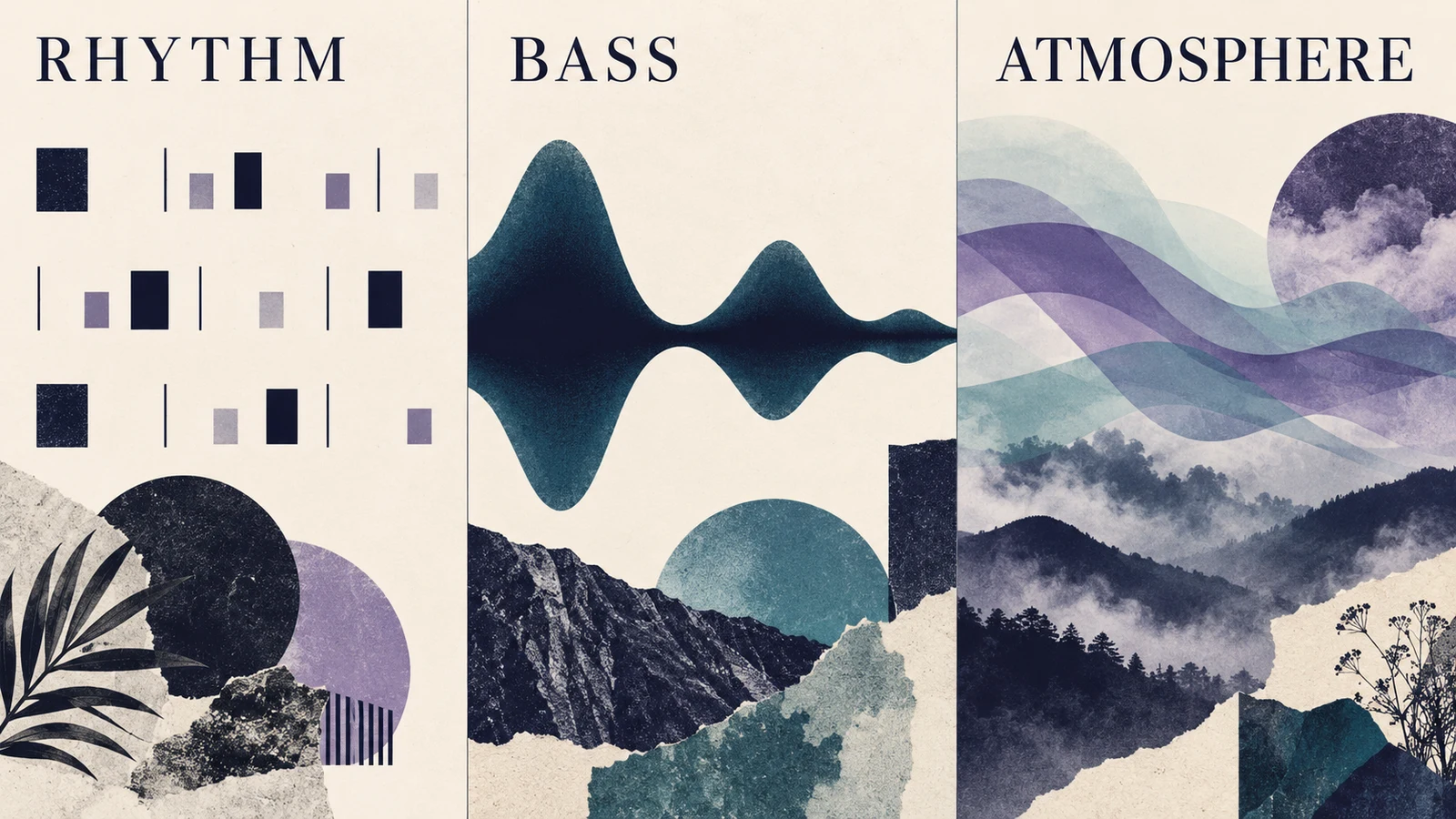
The following questions are a way to describe what you hear. They are not requirements that every track must satisfy.
| Layer | A useful listening question | Language for your own notes |
|---|---|---|
| Rhythm | Does the beat feel patient, forceful, busy, or sparse? | Heavy accents, open gaps, restrained fills |
| Bass | Does it support the pulse or dominate the whole arrangement? | Sustained, rough-edged, simple, prominent |
| Synth texture | Is it sharply defined or spread into a background haze? | Blurred chords, distant lead, dense layers |
| Voice | Is the voice foregrounded, fragmented, or part of the texture? | Clear phrase, distant vocal, obscured detail |
| Structure | What changes when the next section arrives? | Added layer, removed drums, wider texture |
Listen to a short passage more than once, choosing a different layer each time. A dark sound can come from the contrast between elements rather than from making every element equally distorted or loud.
For example, a clearly defined drum hit against a diffuse sustained background creates a different impression from a mix where both are equally blurred. That is a creative observation to explore in your own arrangement, not a claim about one required way to make witch house.
Avoid treating the genre name as a tempo or preset
A genre label is useful shorthand, but it leaves many production decisions unresolved. If you are briefing a collaborator or a music generator, explain the parts that matter to you instead of relying on the label alone.
Write “a slow-feeling rhythm with heavy, widely spaced accents” if that is the effect you want. Write “a restrained electronic pulse with a distant sustained synth layer” if you want less weight. Those descriptions communicate different ideas even before you choose a number for tempo.
Do the same with texture. “Dark” might mean a low register, a sparse arrangement, a rough timbre, or a tense melodic idea. Choose the intended sound rather than stacking all of those possibilities into one overloaded brief.
Our guide to describing music genres offers a broader vocabulary. Use it to compare musical choices, not to force every hybrid track into one category.
Try three original witch-house-inspired prompts
These prompts are starting briefs for exploration. They describe musical qualities without asking for a copy of a specific artist, recording, melody, or voice. Results will depend on the tool and the individual generation.
A spacious instrumental sketch
Dark electronic instrumental with a slow-feeling, heavy drum pulse, a simple sustained bass line, and distant hazy synthesizer chords. Keep the arrangement sparse enough to hear the drum accents clearly. No vocals, bright pop chorus, or busy solo.
Use this to explore the relationship between weight and empty space. If the result becomes crowded, reduce the number of active layers before requesting more effects.
A rougher, more rhythmic variation
Instrumental dark electronic cue with firm drum-machine accents, a rough-edged bass texture, and short repeating synth phrases. Leave gaps between phrases and keep the percussion pattern readable. Build tension through small changes rather than a large festival-style drop.
This version puts more attention on the pulse. Compare it with the first brief and decide which kind of movement fits your project.
A quieter cue for a visual scene
Atmospheric electronic instrumental for a dimly lit night scene. Muted rhythmic movement, a restrained low bass layer, and soft, distant synth tones. Minimal melody, no speech samples or singing, and a gradual ending that leaves room for dialogue.
This is a scene brief, not a claim that all witch house is background music. Review the result against the picture and any spoken audio before using it.
In AISongsGenerator's music generator, use Instrumental when you want a version without singing. The prompt still needs an actual listening check: an instruction does not prove that the output has no voice-like sounds or unwanted changes.
Keep definition somewhere in the arrangement
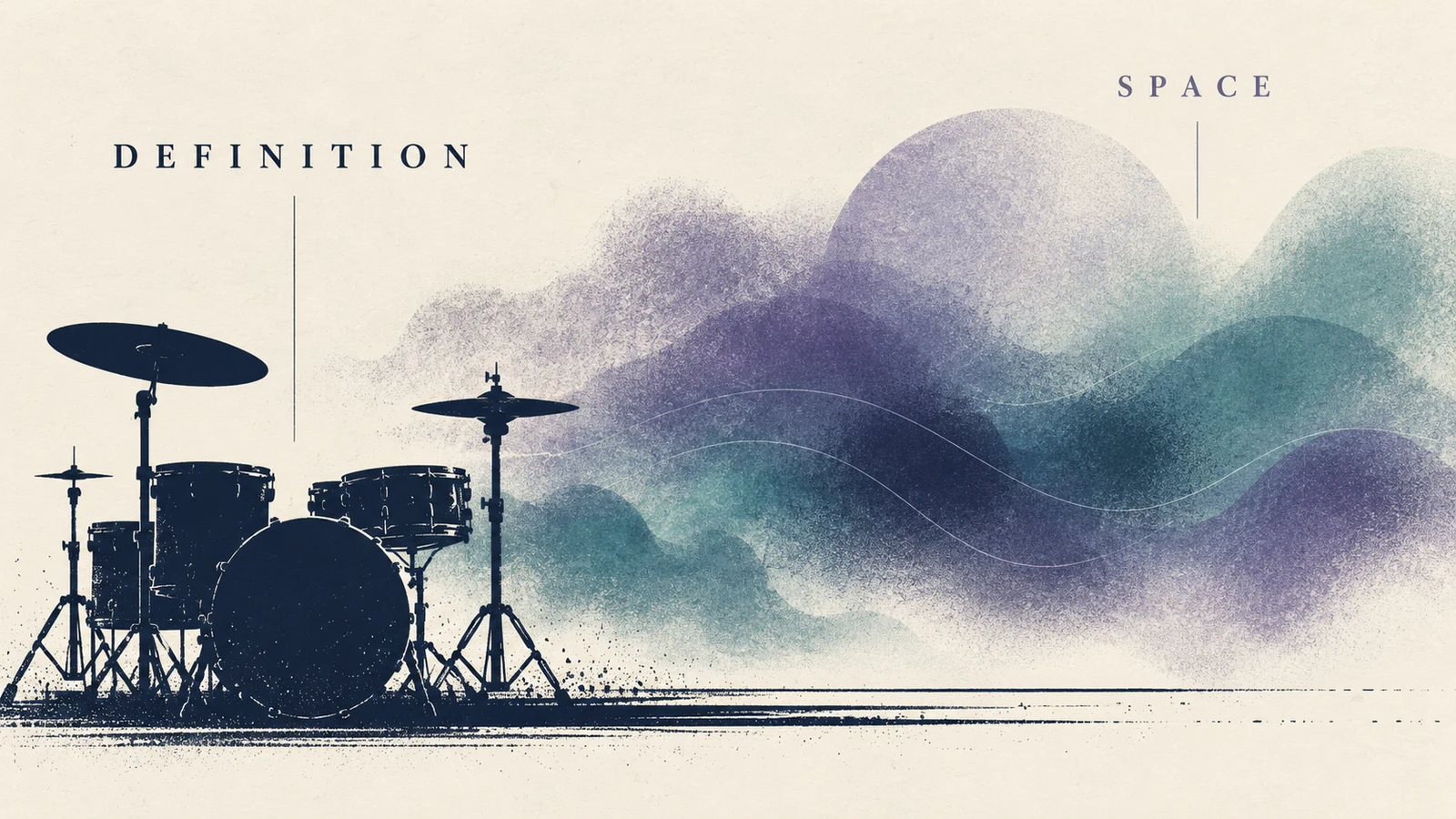
When revising your own sketch, decide which element should remain easy to follow. It might be the drum pulse, a short synth phrase, or the bass movement. If everything competes for attention, adding another layer is unlikely to clarify the idea.
Try one revision at a time:
- If the rhythm disappears, ask for a simpler background and clearer drum accents.
- If the bass overwhelms the melodic idea, reduce its prominence in the brief.
- If the texture feels too polished for your intention, describe a rougher timbre without asking for the entire mix to become indistinct.
- If the cue feels static, introduce a small arrangement change rather than adding a dramatic drop by default.
Save each useful version with a short note about the change. That makes it easier to compare decisions instead of regenerating without a direction. None of these revisions guarantees a particular result; they give the next attempt a clearer purpose.
Use references responsibly and finish the actual audio
An artist page is a place to discover and study music, not permission to sample it. If you use recorded material, establish the necessary rights rather than assuming that a heavily processed fragment is automatically available for reuse. Our copyright-checking guide explains how to trace permissions.
For a generated cue, check current download and usage conditions, listen through the complete file, and keep the original export before editing. If you need a particular length, work against the destination timeline; a mood or genre prompt does not establish the exact duration.
Questions about witch house
Is every dark electronic track witch house?
No. A dark mood alone is not a useful classification rule. Consider the track's musical relationships, artist context, and how the creator or release presents it. Hybrid descriptions can be more accurate than forcing a single label.
Does it have to include vocals?
For your own creative exploration, you can start instrumentally. A vocal texture is one possible element, not a reason to add a voice when the project does not need one.
Can an AI prompt guarantee an authentic genre result?
No. It can communicate a direction. Listen to the output, describe what is missing, and revise the musical choices. Naming a genre does not replace judgment or make a generated track representative of an entire scene.
Describe the sound before naming the result
To understand witch house music, use artist references as a starting point and listen for how rhythm, bass, and atmosphere interact. For your own work, turn those observations into specific musical instructions. The goal is a coherent original idea, not a checklist of dark imagery or an imitation of someone else's track.