Make money with AI music by delivering something useful
To make money with AI music, you need more than a folder of generated tracks. You need a listener or customer, a result worth paying for, and permission to use and deliver the material in that way. AI can help create musical options; it does not supply demand, guarantee distribution, or make every output commercially usable.
Three routes are worth evaluating: customized client work, music within your own original content, and carefully prepared releases. They require different skills and different evidence that someone wants the result.
This guide compares those routes without income forecasts or claims of personal earnings. Platform rules were checked against official sources on October 7, 2026.
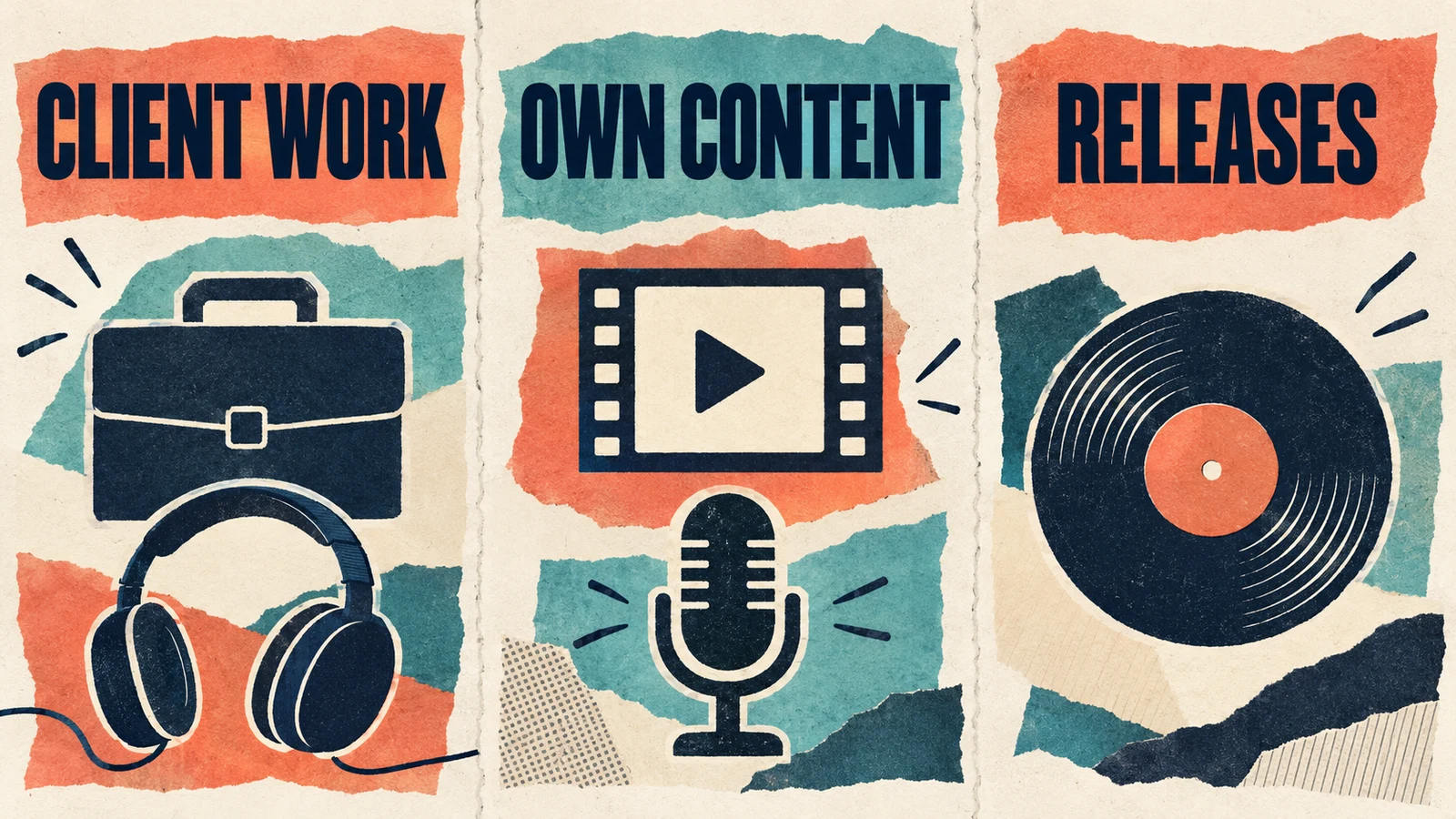
| Route | What you provide | What to validate first |
|---|---|---|
| Client work | Music tailored to a specific brief, with revisions and delivery | A real customer need and permission for the intended use |
| Your own content | A distinctive video, lesson, performance, or other audience experience | Whether people value the complete content |
| Music releases | Finished tracks with accurate credits, artwork, and a release plan | Rights, distributor requirements, and a credible audience plan |
Choose one route for your first experiment. Trying all three at once makes it harder to identify whether the problem is the music, the offer, or the way you reach people.
1. Offer a specific client service
A focused offer is easier to evaluate than “I make AI songs.” For example, you might propose a short instrumental opening for a podcast, music edited to fit a product video, or a vocal demo using a songwriter's authorized lyrics.
These are possible service concepts, not proven market demand. Before building a catalog, ask a potential customer what they currently use, what is missing, and what they would need delivered. A preference for a different mood is a different job from a request for exclusive ownership or separate instrument stems.
Write the brief before generating:
- Where will the music be used, including advertising or client channels?
- What duration, mood, instrumentation, and vocal approach are needed?
- Which files and versions must be delivered?
- How many revision rounds are included?
- Is AI assistance acceptable to the customer?
- What rights can you actually provide?
If you use a freelance marketplace, read its rules as well as the music tool's terms. Fiverr permits responsible AI use, but expects original, meaningfully refined work tailored to the client. It also requires freelancers to respect a client's explicit request for non-AI work. A generic, unchanged output is not a substitute for the service you promised.
Your contribution should be visible in the result: selecting an appropriate arrangement, correcting timing, balancing the music under speech, and handling revisions. Avoid promising capabilities you have not verified, such as clean stems, exact vocal control, or an exclusive license.
Build a delivery package, not just a download link
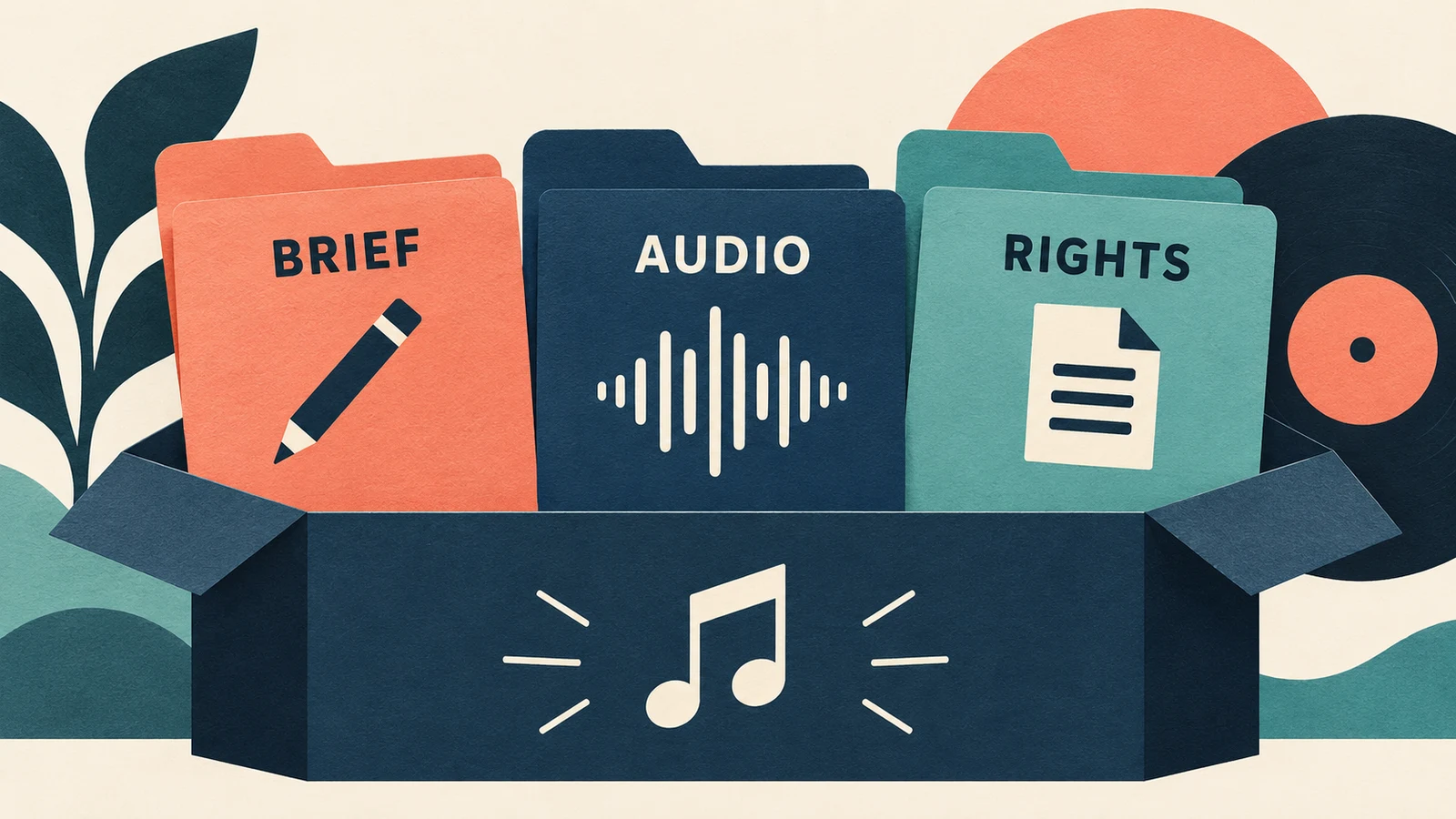
Consider a hypothetical 30-second product video. A useful delivery might include the approved full cue, an agreed shorter cut, a clearly named preview, and a note documenting permitted use. That package should match the brief; do not add formats or rights merely to make the offer look larger.
Listen to the exported files from beginning to end. Check the opening, every edit, the ending, and any unwanted vocal fragments. Confirm the duration in the video timeline rather than relying on a rounded player display. Our guide to fitting music to video length explains that finishing stage.
Keep the accepted brief and revision decisions with the final files. If a customer asks for a different song after approving the direction, a written scope helps distinguish a revision from a new assignment.
2. Use AI-assisted music in original content
Music can support something you already create: a filmmaking tutorial, an original animated story, a performance breakdown, or a documented songwriting process. In this route, the audience pays attention to the whole experience. The music is one part of its value.
For example, a tutorial could explain how you turned a brief into a finished cue, play selected alternatives, and show why you changed the arrangement. The useful contribution is the explanation and creative judgment, not the number of tracks generated.
YouTube's monetization policies require original and authentic content and exclude repetitive or mass-produced material. They specifically address generic AI-generated templates that add no original perspective. Changing a title or background image does not make interchangeable uploads a dependable monetization strategy.
A channel also has to satisfy the applicable program and other platform requirements. Permission to use a piece of music does not guarantee that a video or channel qualifies for ads. Evaluate whether each upload gives viewers a distinct reason to watch before you evaluate potential revenue.
3. Release music with a clear audience and rights trail
Distribution can make a track available, but availability is not the same as an audience. Start with a small, coherent release that you would want listeners to return to. Review the complete audio, prepare accurate credits, and decide how you will introduce the music to people who might care about it.
DistroKid's AI music guidance says it accepts music made with AI tools subject to conditions. Uploaders must have the required rights, avoid unauthorized impersonation and infringement, and avoid mass-generated spam. Streaming services may still reject or remove releases that do not meet their guidelines.
That is not a blanket approval for every generated track. Check the tool's output terms, any uploaded source audio, samples, lyrics, voices, and the destination service's requirements. Do not invent human performer credits or imply that a recognizable person participated when they did not.
Also separate recording income from composition income. Our music publishing royalties guide explains why a distributor account is not necessarily a complete publishing administration setup. Neither registration nor distribution guarantees that a track will earn money.
Check rights before promising a commercial result
“Commercial use allowed” can be narrower than the promise you are making to a customer. Using music in your own video, supplying it to a client, reselling an audio asset, assigning ownership, and offering exclusivity are different arrangements. Read the applicable terms for the specific action rather than treating one label as permission for all of them.
Keep the tool and plan details, generation date, original inputs, collaborator permissions, and relevant terms with your project. If a needed right is unclear, resolve that point before accepting the job. Do not use an unauthorized artist voice as a shortcut to making the track attractive.
You can explore musical direction with AISongsGenerator's music generator. Check the current pricing and usage conditions before building an offer around downloads or commercial delivery. The generator is part of the creation workflow, not a promise of sales or exclusive ownership.
Price the work around costs and revision time
Track what the project actually consumes: generation credits, editing time, communication, export work, platform fees, and revisions. Include failed attempts in that record. Otherwise, a fast generation can disguise a slow delivery process.
A simple planning calculation is:
Project contribution before tax and fixed overhead
= customer payment
- project-specific tool costs
- payment or marketplace fees
- other direct delivery costs
Then compare that amount with the total hours spent. This is a planning method, not a suggested price or expected return. Use your actual fees and costs; do not borrow an online earnings screenshot as a forecast.
For a first experiment, define one deliverable and a limited revision scope. Record whether the customer accepted the result, why they requested changes, and how long delivery took. Those observations tell you more about whether to continue than the number of songs you generated.
Questions about earning with AI music
Is AI music passive income?
It should not be planned that way. Client communication, editing, rights checks, publishing, and finding an audience all take work. A track can also earn nothing after release.
Can I sell music made on a free plan?
Only if the applicable terms permit the specific use. Free generation, downloadable audio, commercial permission, and resale rights are separate questions. Verify the conditions attached to your output rather than assuming an upgrade or a download settles them.
Do I need to be an experienced musician?
AI can help you explore ideas, but you still need enough listening and editing judgment to deliver what you promise. Start with a narrow task you can review reliably, and avoid selling specialist production work you cannot assess.
Start with one customer problem or one audience idea
The practical way to make money with AI music is to test a useful offer, finish the work carefully, and keep the rights and costs clear. Choose a small project, define what success would look like, and review the result before expanding. More output is only helpful when it serves a real customer or listener.