
Can AI music replace a human composer for your project?
AI-generated music may be enough when your project needs an acceptable finished track and you can adapt the edit around it. A composer is worth considering when you need specific musical decisions, detailed revisions, or a set of related deliverables that someone is responsible for producing.
That is a project decision, not a prediction about the future of composition. A beautiful first result does not answer whether you can change its ending, preserve its theme across several cues, or deliver the files your editor needs.
Start with the work that remains after the first listen. That is where the differences become useful.
Compare responsibilities, not just sound
A generator, an editor, and a commissioned composer can play different roles in the same project. None of those labels guarantees a successful outcome. Check the actual capabilities of the service and the scope of the agreement.
| Requirement | What to check in a generated-music workflow | What to agree with a composer |
|---|---|---|
| Explore a musical direction | Can you describe and compare useful alternatives? | Is an initial sketch or concept stage included? |
| Revise a specific moment | Can the tool edit that region without changing parts you need to keep? | How are revision notes handled, and how many rounds are included? |
| Match a changing video | Can you trim or restructure the exported music successfully? | Who handles later picture changes and revised timings? |
| Deliver separate parts | Are the required exports actually available and usable? | Which stems, mixes, or session materials are included? |
| Maintain a theme across cues | Can you achieve the continuity you need in practice? | How will the theme develop across scenes or episodes? |
| Approve the final use | Do the current terms fit your intended use? | What uses and permissions does the written agreement cover? |
These questions are more informative than deciding that one route is always cheap, fast, expressive, or professional. A narrow task may suit a simple workflow. A complicated brief may require several people and tools.
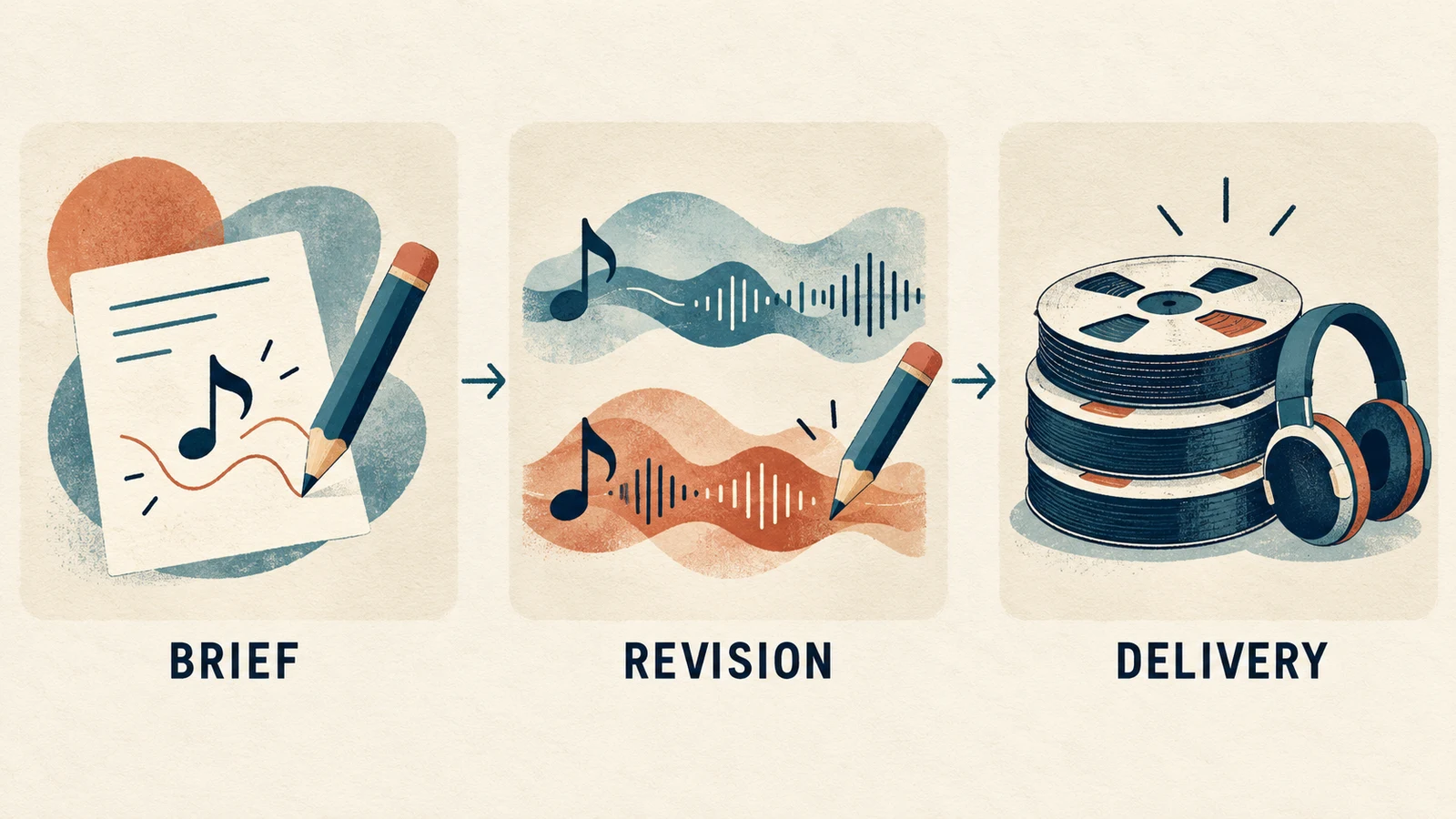
Use the revision you expect as the test
Imagine a short product video with spoken narration. The music's mood is right, but the melody becomes busy during the explanation. The final chord also arrives before the closing image.
“Make it better” is hard to act on. A useful note is:
Keep the opening texture. Reduce the melodic activity beneath the explanation, then let the final chord resolve with the closing image.
Now ask how your chosen workflow would handle that note. Can you make the change in an editor? Does the generator offer a suitable regional edit? Would a composer revise the arrangement and timing under the agreed scope?
Do not assume every AI tool only regenerates whole tracks. For example, Suno's Song Editor documentation describes section replacement, lyric edits through regenerated audio, cropping, and fades. Equally, the existence of an edit button does not establish that a particular revision will preserve everything you value. Audition the result.
For a composer, turn the same request into a clear brief. Supply the current picture, relevant timings, and the reason for the change. Ask what happens if the picture changes again after approval. A shared understanding of revisions matters more than an impressive portfolio alone.
Try a small, representative brief
Before committing the whole project, choose a task that resembles the difficult part of the work. The following is a proposed exercise, not a reported comparison test:
An understated instrumental cue for a narrated demonstration. Sparse keys, a gentle pulse, and no lead vocal. Leave room for speech. Build slightly toward the closing image, with an ending that can be edited cleanly.
You can explore that direction in AISongsGenerator's music generator, using Instrumental when you do not want singing. Listen to the output against the actual narration. Treat timing and arrangement requests as creative direction, not guaranteed controls.
If you are discussing a commission, use the same brief as the basis for a scoped conversation or agreed paid sketch. Specify the files and revision you want to evaluate. Do not assume a composer will provide unpaid custom work.
Judge the result by the requirements: does speech remain clear, does the cue support the intended mood, and can the ending be made to work? A track that is enjoyable on its own may still be wrong beneath the scene.
Count the finishing work
The first file is only part of the effort. Keep track of the time spent selecting candidates, making edits, checking permissions, managing feedback, and preparing the final exports.
For generated music, include the work of rejecting near-misses. If the same requirement keeps failing, change the workflow rather than indefinitely generating alternatives. You may need a different arrangement, a simpler brief, or help from an editor or composer.
For commissioned music, include the time needed to prepare the brief and provide consolidated feedback. Contradictory notes from several reviewers can slow any creative process. Name one person who will collect the comments and approve the result.
There is no useful universal price comparison here. Quotes, subscriptions, revision scope, and delivery requirements vary. Compare what your project actually receives and what you still have to do afterward.
A hybrid workflow needs a clear handoff
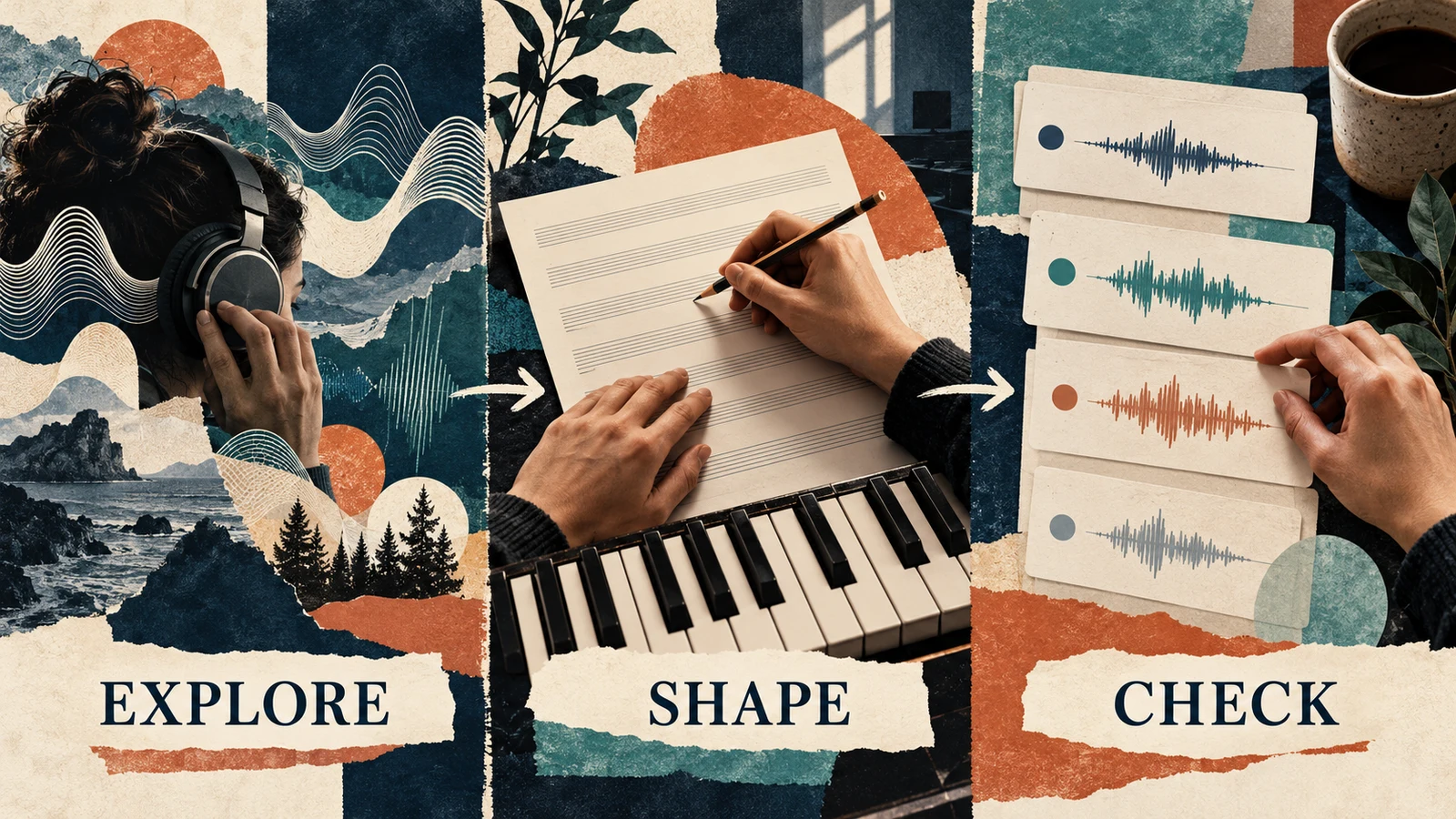
Generated ideas can help a team discuss mood, density, or instrumentation. If you pass one to a composer, explain what you like about it: the restrained percussion, the space around speech, or the gradual energy change. Avoid using “copy this exactly” as a substitute for a brief.
Tell the collaborator how the reference was made and ask whether they are comfortable using it. Decide whether the generated file is a temporary reference, material to edit, or part of the intended final soundtrack. Those are different assignments.
A practical handoff includes the current picture or project context, the written brief, the approved reference role, a list of deliverables, and the next review date. Keep notes about which version is approved so an older cue does not accidentally reach the final export.
This approach can combine exploration with deliberate finishing, but it does not remove the need to agree on responsibility. Someone still has to check the finished music in context.
Ask for the files you will actually use
If you need to lower the drums without changing the melody, a single mixed file may not be enough. Ask whether separate parts are available, how they are organized, and whether they sound suitable for the intended mix. Do not infer an editable session or score from the existence of an audio download.
For video, specify the full cue and any alternate endings or shorter versions you need. Our guide to fitting music to a video length explains the editing decisions involved. If the music will be used inside an app, also consider the playback and interruption behavior discussed in AI-generated music in apps.
Before release, check the applicable service terms or commission agreement for your actual use. Keep the relevant records with the files. Neither “AI-generated” nor “made by a composer” is a substitute for knowing what was supplied and what you are permitted to do with it.
Common questions
Is a human composer always the better choice?
No. The appropriate choice depends on the brief, the person's skills, the available tools, and the work you can handle yourself. Use a representative task and a clear delivery scope rather than relying on the label.
Can I use AI music as a temporary reference?
You can consider it as part of your exploration workflow, subject to the service's terms and your project's policies. Tell collaborators where it came from and explain the qualities you want to discuss. Agree on whether any of that audio belongs in the final project.
Does hiring a composer guarantee exclusive rights?
Do not assume that. Establish the intended uses and any exclusivity requirement in the written agreement. If those terms are central to the project, have the agreement reviewed before relying on it.
Choose the workflow that can finish the job
Write down your hardest revision and your required delivery files before choosing a route. If generated music meets those needs after review, use the workflow that works. If it does not, bring in the musical or production help the project requires. The decision becomes clearer when you evaluate a finished assignment rather than a promising first track.